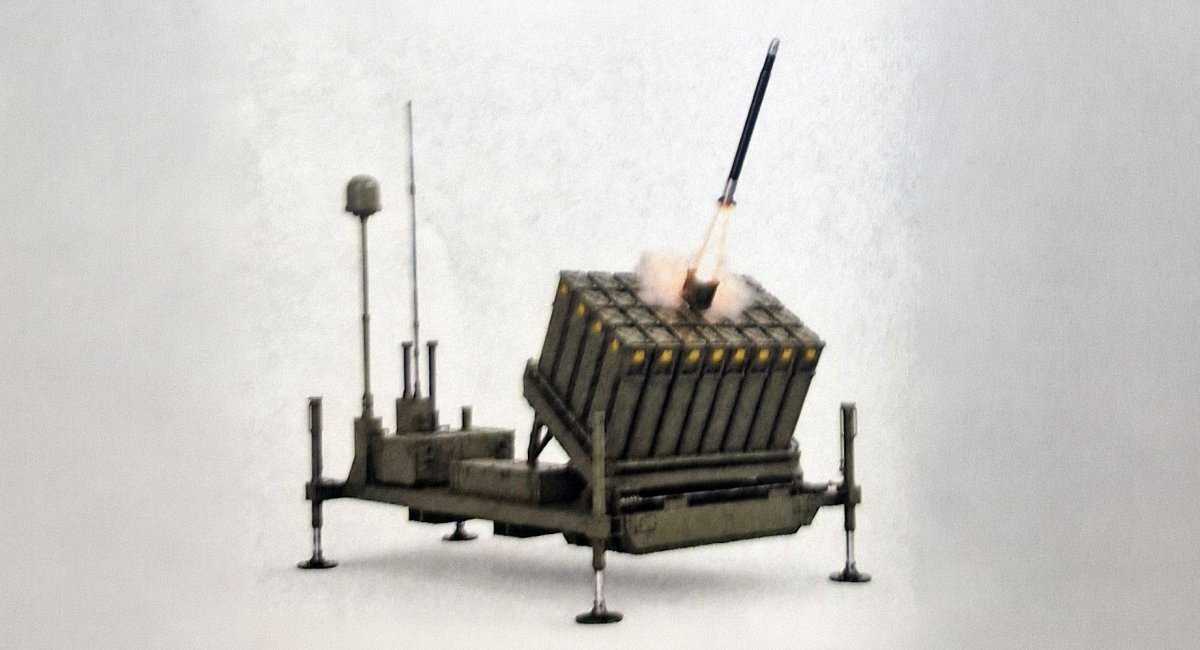
European defense giant MBDA and Poland’s Wojskowy Instytut Techniczny Uzbrojenia (WITU), or Military Institute of Armament Technology, have presented a new air defense system designed to engage drones and cruise missiles. The official designation of the system and its interceptor missile has not yet been announced.
The system consists of a stationary launcher carrying 32 surface-to-air missiles, as well as the missiles themselves, which are being developed jointly with MBDA. Under the division of work, MBDA is providing a low-cost infrared seeker and guidance system, while WITU is responsible for the remaining components.
Read more: Poland Claims 1,000km Fly Focus Striker Deep-Strike Drone Ready for Serial Production, But Still Needs Testing, Raising Questions
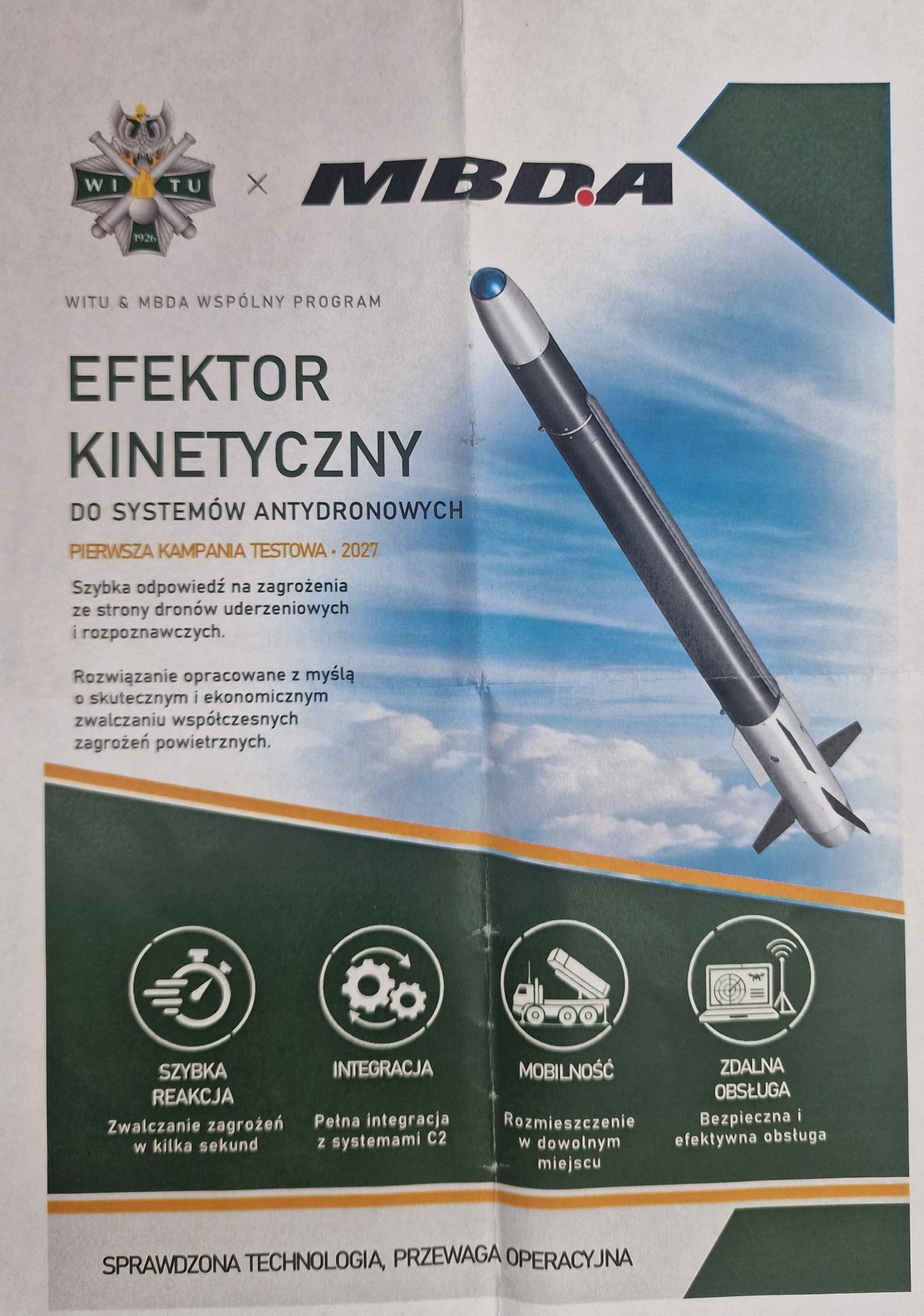
The same type of infrared seeker is already used in MBDA’s recently unveiled Counter Mass Interceptor (CMI), a new low-cost interceptor designed to counter drones and other lower-end aerial threats. CMI has also been integrated into the surface-launched ASRAAM system, which has seen combat use in Ukraine.
Returning to the new Polish missile, it is expected to be capable of intercepting drones and cruise missiles at ranges of up to 6 km and altitudes of up to 5 km. The missile is currently at the integration stage, with the MBDA seeker being incorporated into the Polish design. The first tests of the integrated missile are planned for 2027.
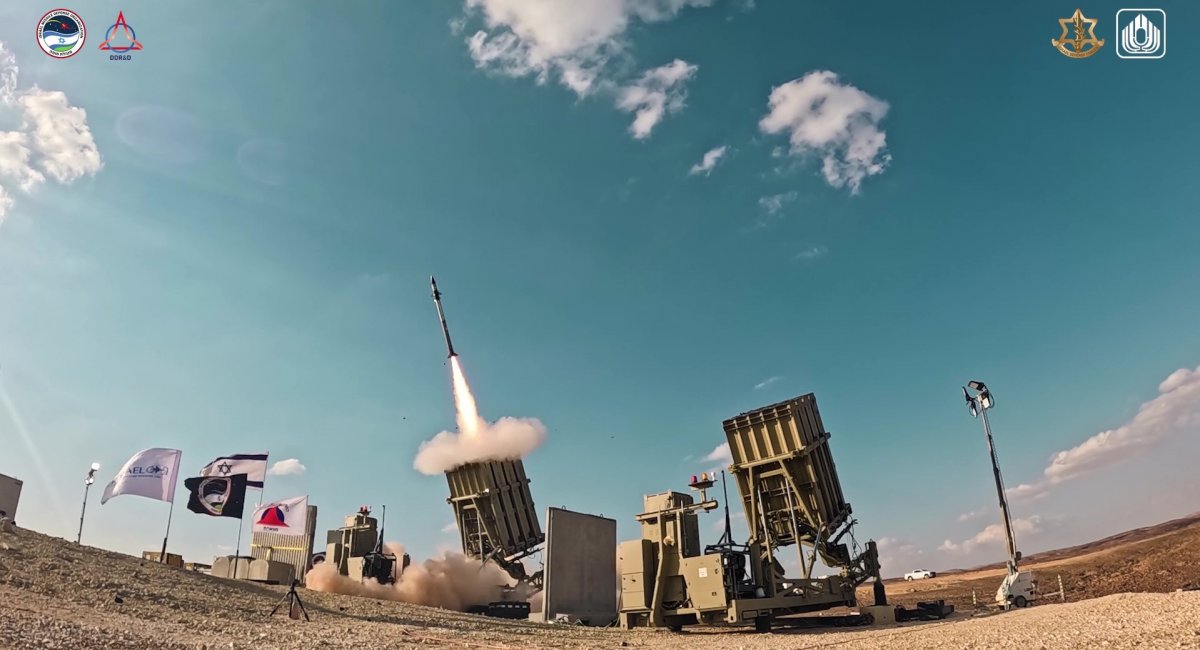
The launcher’s concept resembles that of the Israeli Iron Dome air defense system. The Polish launchers could potentially be deployed around critical infrastructure and along likely flight paths of drones and cruise missiles.
With 32 interceptors ready to launch and the ability to fire one missile every two seconds, the system is intended to deal with genuinely massed attacks. This capability could become particularly relevant if Poland ever faces large-scale russian drone and cruise-missile strikes.
However, both the launcher and the interceptor missile remain under development and integration. It has also not yet been disclosed how the system will detect and track targets. The developers have confirmed that it will be integrated with Poland’s Zenit C2 command-and-control system.
Zenit C2 integrates various air defense assets, including radar stations. This suggests that target data could potentially be transmitted from a radar through the Zenit C2 network to the launcher and then to the interceptor for mid-course guidance and correction. As the missile approaches the target area, its onboard infrared seeker could autonomously acquire the target and guide the interceptor during the terminal phase.
Read more: Before Ukraine Used Piorun MANPADS to Shoot Down russian Aircraft, Poland Made 300 Missiles Year, This Year, It Will Make 1,700