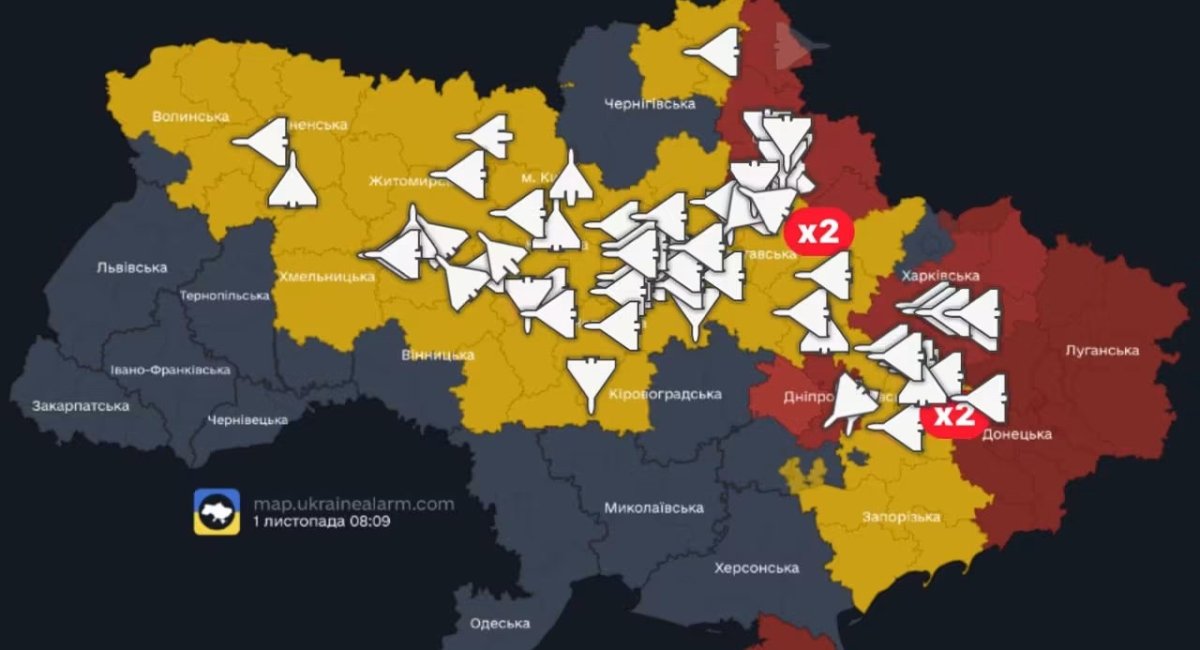
russian forces launched a large-scale overnight drone attack on Ukraine, relying predominantly on conventional gasoline-powered Shahed UAVs rather than their jet-powered variants. According to the Ukrainian Air Force, only 64 of the 433 attack drones launched since the evening of October 31 were jet-powered.
Ukrainian air defenses intercepted or suppressed 371 enemy drones, including 47 jet-powered UAVs.
Read more: Another Satellite for russia's Starlink Rival Falls Out of Orbit: How Are Other Rassvet-3 Satellites Doing?
The unusual composition of the attack may have been linked to weather conditions over Ukraine. Serhii Beskrestnov, known by the callsign Flash, explained that widespread cloud cover likely influenced russia’s choice of drones.
According to Serhii Beskrestnov, russia launched dozens of conventional gasoline-powered Shahed drones because overcast skies make it more difficult for Ukrainian interceptor-drone crews to detect incoming targets.
He noted that the enemy was apparently attempting to exploit these conditions to reduce the effectiveness of Ukraine’s interceptor drones, which are increasingly used to counter russian long-range UAV attacks.
Unlike conventional Shaheds, jet-powered variants have different flight characteristics and are generally faster, making them more difficult to intercept. However, conventional gasoline-powered drones can also pose a challenge, particularly when weather conditions limit visual detection.
Read more: russia Involves Children as Young as Seven in Drone Training in Sevastopol