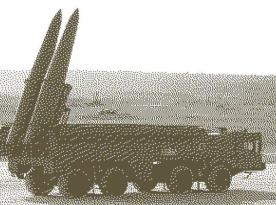
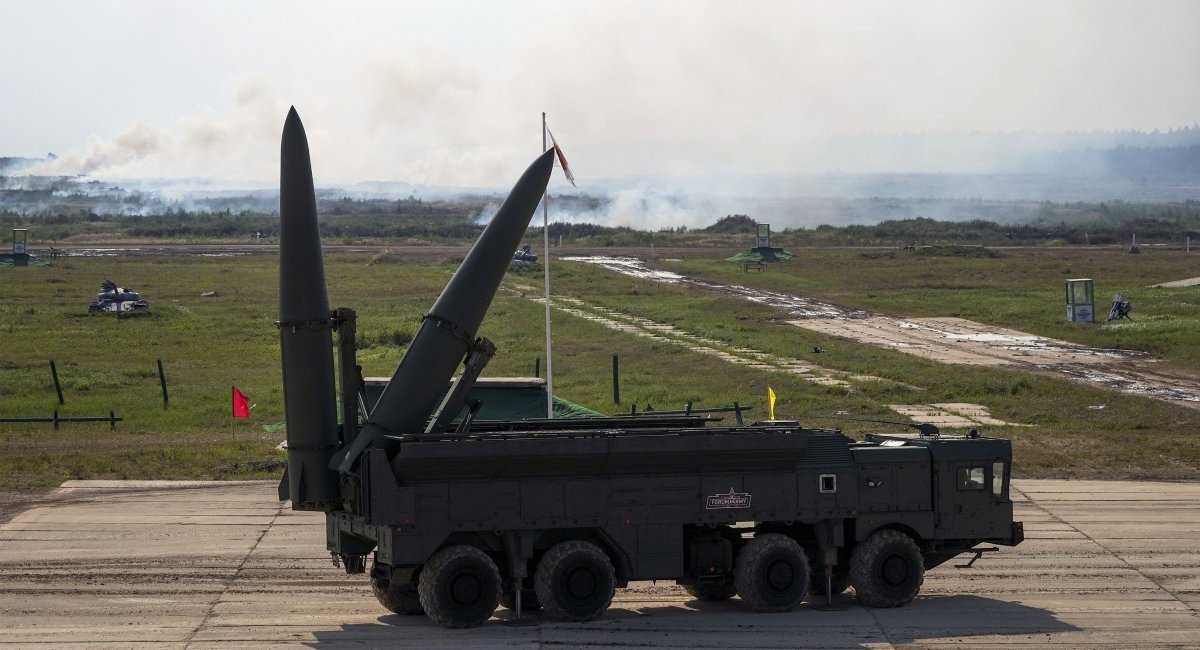
The Defense Intelligence of Ukraine has updated the previously established specifications for the russian 9M723 ballistic missiles used in the Iskander missile system.
Although a range of 500 km has become the standard figure, according to the Defense Intelligence of Ukraine, the actual range is 390 km. This information is now listed on the War&Sanctions portal, although the site previously listed a range of 500 km, as confirmed by the cached version of the page.
Read more: Ukraine's Defense Intelligence: russia Asks North Korea for Missiles Three Times More Powerful Than KN-23
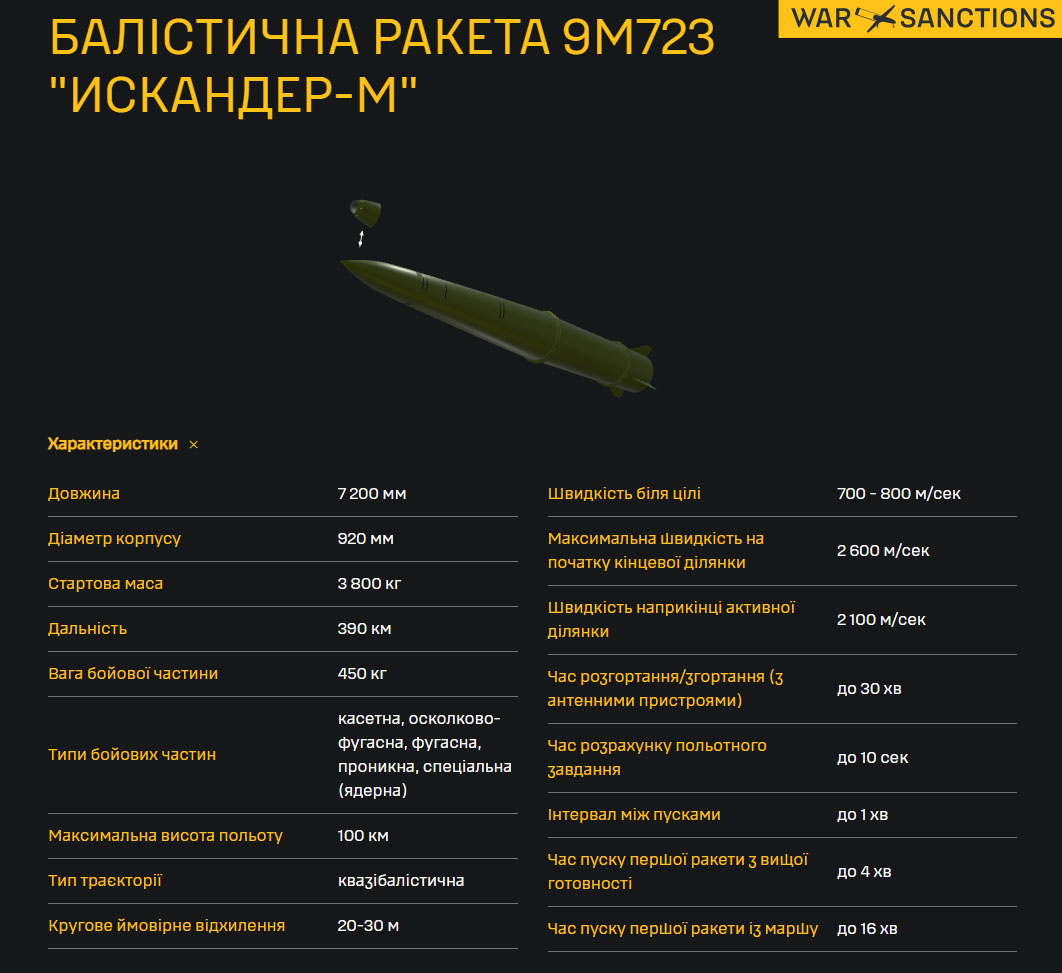
Most likely, the information was updated after data was received about a new version of the missile, designated 9M723-2, which russians have also called the Iskander-1000. To clarify, the first variant of this missile is designated 9M723-1.
Despite its name, Iskander-1000, according the Defense Intelligence of Ukraine, its range is 550 km. It can only be launched from the new Bora-M launchers due to its greater length. This missile has already been used in an attack on Kyiv.
russian unofficial sources reported that this missile, thanks to a solid-fuel engine that is 10–15% larger and uses new, high-energy fuel, would allegedly have a range of 900–1,000 km with a 300–350 kg warhead, compared with the 410- or 610-kg warhead of the 9M723-1, depending on the variant.
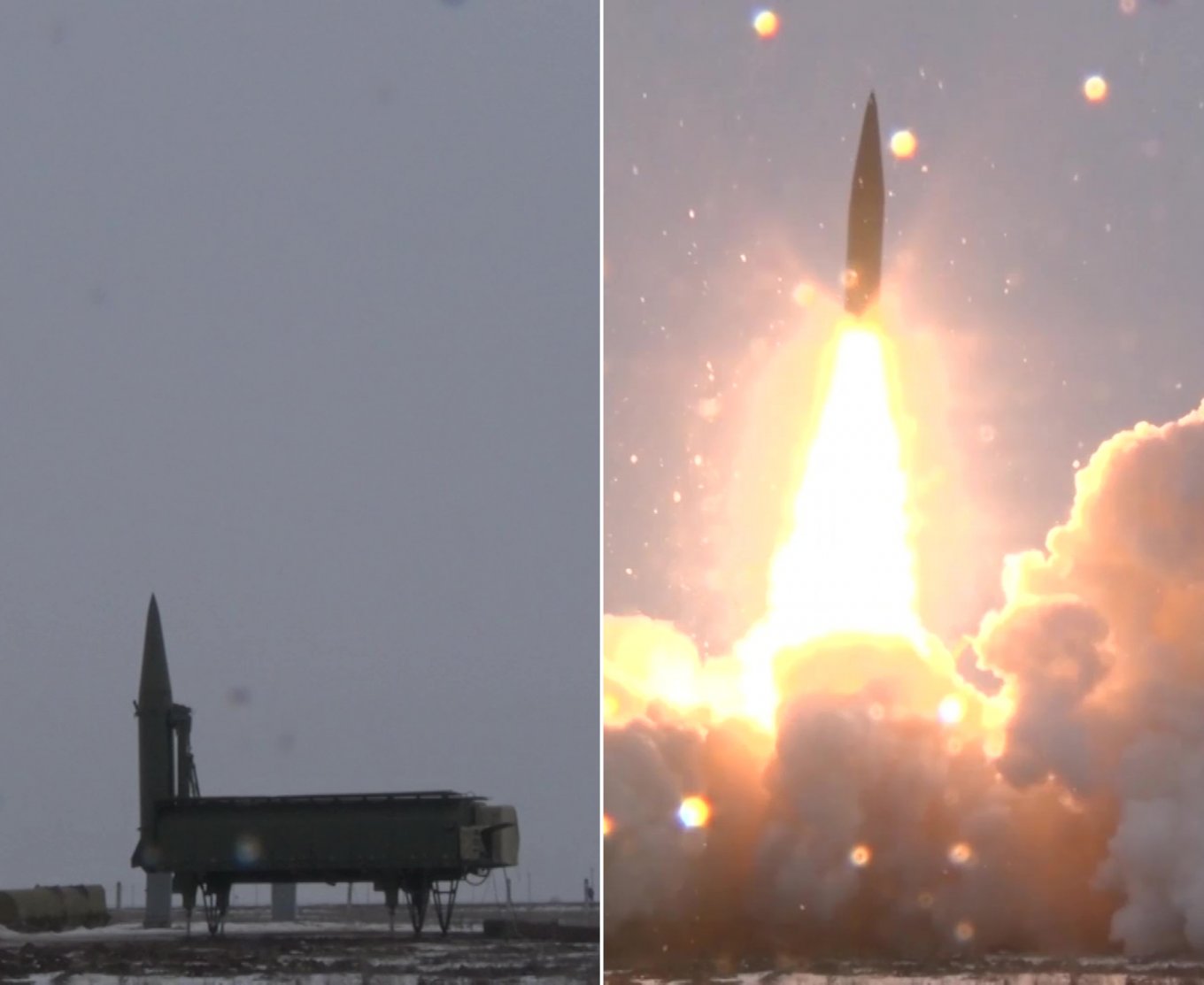
At the same time, there may be a fairly logical explanation for why the 9M723-1—which has always been cited as having a range of 500 km—turns out to have a range of 390 km, while the new 9M723-2 is capable of reaching 500 km. The fact is that information regarding the range of the Iskander missile system has been subject to numerous manipulations by the Kremlin.
In Moscow, it was consistently claimed that the Iskander system did not violate the Intermediate-Range Nuclear Forces Treaty, which called for the elimination of and a ban on the development of ground-based ballistic and cruise missiles with ranges of 500–5,500 km. This is why early reports about the Iskander often stated that it had a range of "up to 500 km" and did not violate the INF Treaty.
And because the phrase "up to 500 km" was constantly repeated and cited, it eventually became accepted as "500 km" for the 9M723 ballistic missile. At the same time, the Iskander violated the INF Treaty not with a ballistic missile, but with the 9M729 cruise missile. This is a land-based variant of the Kalibr, with a maximum range estimated at between 1,500 and 2,600 km, according to various sources. This missile was one of the reasons for the collapse of the INF Treaty.
Read more: Ukrainian Drones Strike russian $100 Million Nebo-U Radar in Rostov Region (Video)