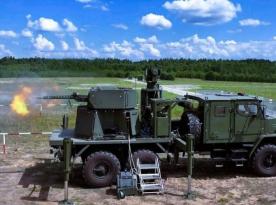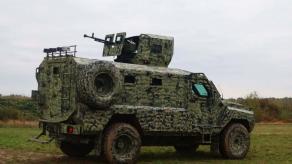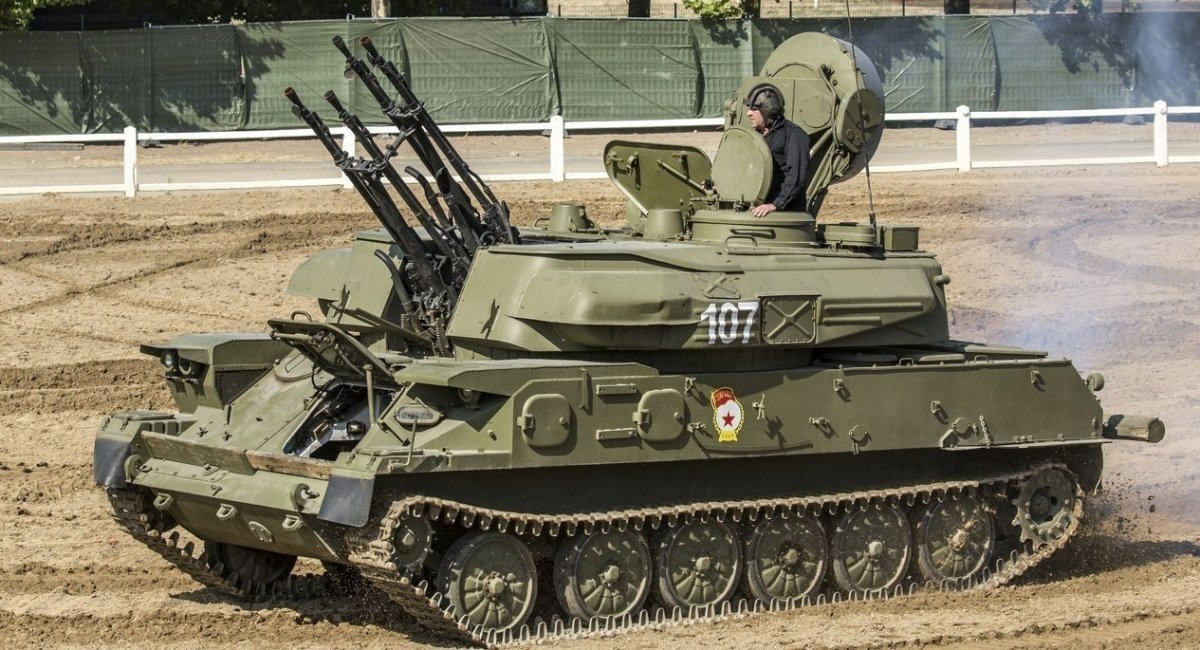
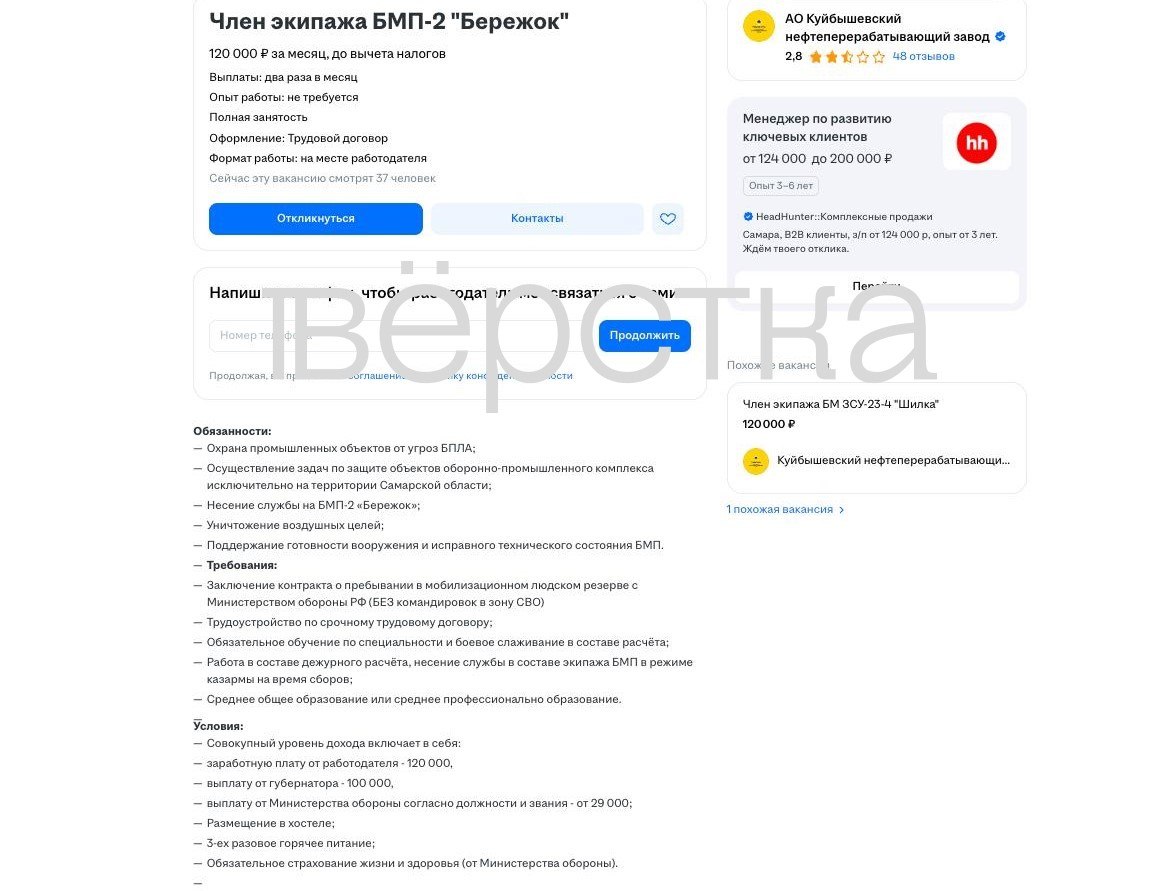
The Kuibyshev oil refinery in Samara has published a job advertisement seeking operators for self-propelled ZSU-23-4 Shilka anti-aircraft systems and BMP-2M infantry fighting vehicles (IFVs) equipped with Berezhok combat modules. The latter are reportedly also capable of engaging drones, including long-range UAVs.
The key requirement is for candidates to sign a mobilization contract with the russian Ministry of Defense. The information was first reported by Verstka, a russian opposition media outlet. This raises the question of whether russian oil refineries have been granted permission to acquire heavy military equipment that is already in short supply within the russian Armed Forces for their own air defense.
Read more: russia Develops Turret Equipped with Arena APS to Protect Against Ukrainian Drones, Blurring the Line Between T-90M and T-80BVM2 Tanks
Available estimates suggest that the russian Armed Forces have only around 500 BMP-2/BMP-2M IFVs in service, while approximately 2,000 additional BMP-1 and BMP-2 vehicles remain in storage.
The situation is even more striking with the ZSU-23-4 Shilka. Officially, these self-propelled anti-aircraft systems are operated exclusively by the Naval Infantry, which has approximately 60 in service. The possible number in storage has not yet been disclosed.
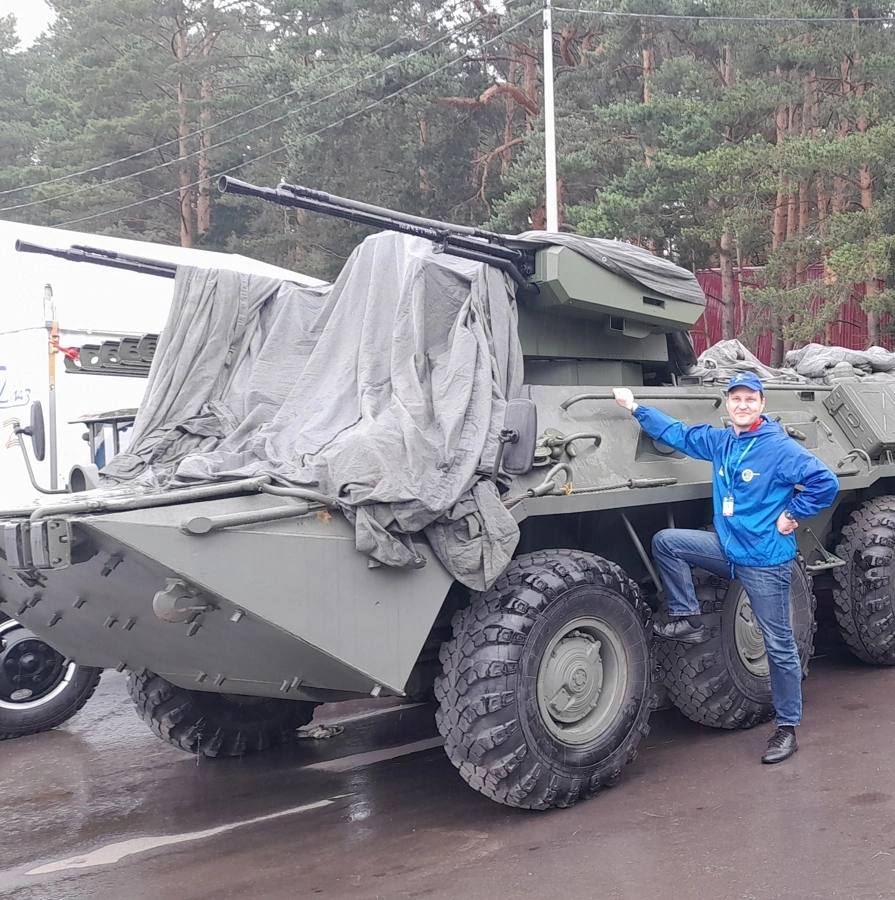
Moreover, in 2023, a russian private company presented an unusual project combining the 23-mm Shilka guns with the BTR-82 armored personnel carrier. In other words, many of the ZSU-23-4 Shilka systems placed in storage in russia may have been stripped for parts over the years, potentially explaining their current scarcity.
Against this backdrop, two scenarios seem plausible. One is that certain russian oil refineries have used their informal networks to secure access to decommissioned but scarce military equipment.
The crews are expected to include personnel with backgrounds similar to those of the fighters who formed the backbone of the volunteer Cossack detachment Don, the first unit that received the BMP-2M IFVs with Berezhok combat modules.
Alternatively, this could be a covert mobilization scheme in which crews assigned to Shilka anti-aircraft systems and BMP-2M IFVs equipped with Berezhok modules would, after signing contracts with the russian Ministry of Defense, be sent directly to the battlefield in Ukraine rather than deployed to protect oil refineries in the russian rear.
Read more: russia Claims It Delivered 18 Su-34s in 2025: How Many of These Guided-Bomb Carriers Has It Received in 2026?