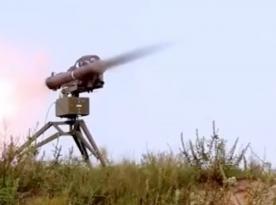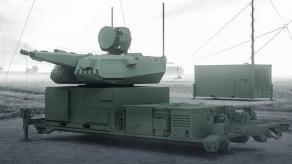

Turkish defense company Aselsan showed concept integrating its GOKDENİZ and GOKSUR VLS air defense systems on civilian fleet vessels, including tankers, for self-defense.
This somewhat resembles russian Club-K project, which was created for Kh-35 and Kalibr missiles, with installation of disguised container launcher on deck of civilian vessel. Therefore logical question arises about how quickly russians will decide to copy Turkish concept of air defense systems on civilian ships.
Read more: M-346N Wins U.S. Navy Trainer Contest by Default, Last Rival Sierra Nevada Quits After Northrop, Lockheed and Boeing Already Walked Away
Naval News writes about Aselsan’s work on integrating GOKDENİZ and GOKSUR VLS for civilian vessels. Video demonstrates how integration of these air defense systems on civilian fleet vessels should generally look.
GOKDENİZ can be called stationary variant of KORKUT anti-aircraft gun, adapted for deployment on maritime transport. Characteristics of deck-mounted GOKDENİZ essentially do not differ from base KORKUT, meaning rate of fire is 1,100 rounds per minute, engagement range is up to 4 kilometers. However ammunition load of 35mm rounds is not disclosed.
In turn GOKSUR VLS is air defense missile system with engagement range up to 15 kilometers. Use of artificial intelligence elements is claimed in fire control system.
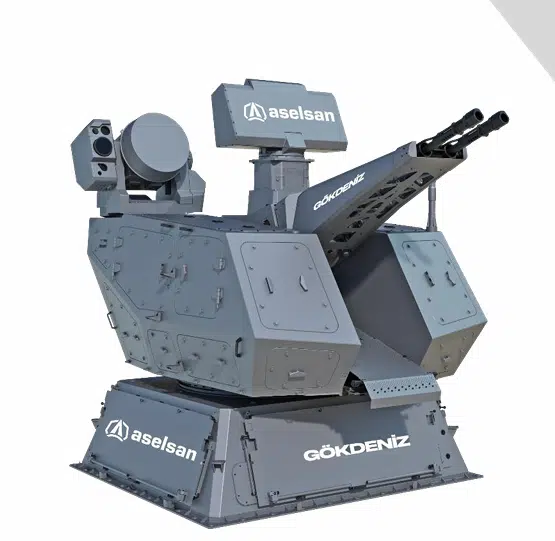
Both mentioned systems are envisioned with modular design principle, meaning their integration should not require structural modifications to civilian vessels for self-defense.
In turn russian Club-K could be called unrealized project, without any associative ties. However for example China has had its own reincarnation of this project since 2022 called CSDCS, designed for several types of anti-ship and anti-radiation missiles. There it is quite possible russia could have transferred relevant containerized cruise missile launcher developments to chinese.
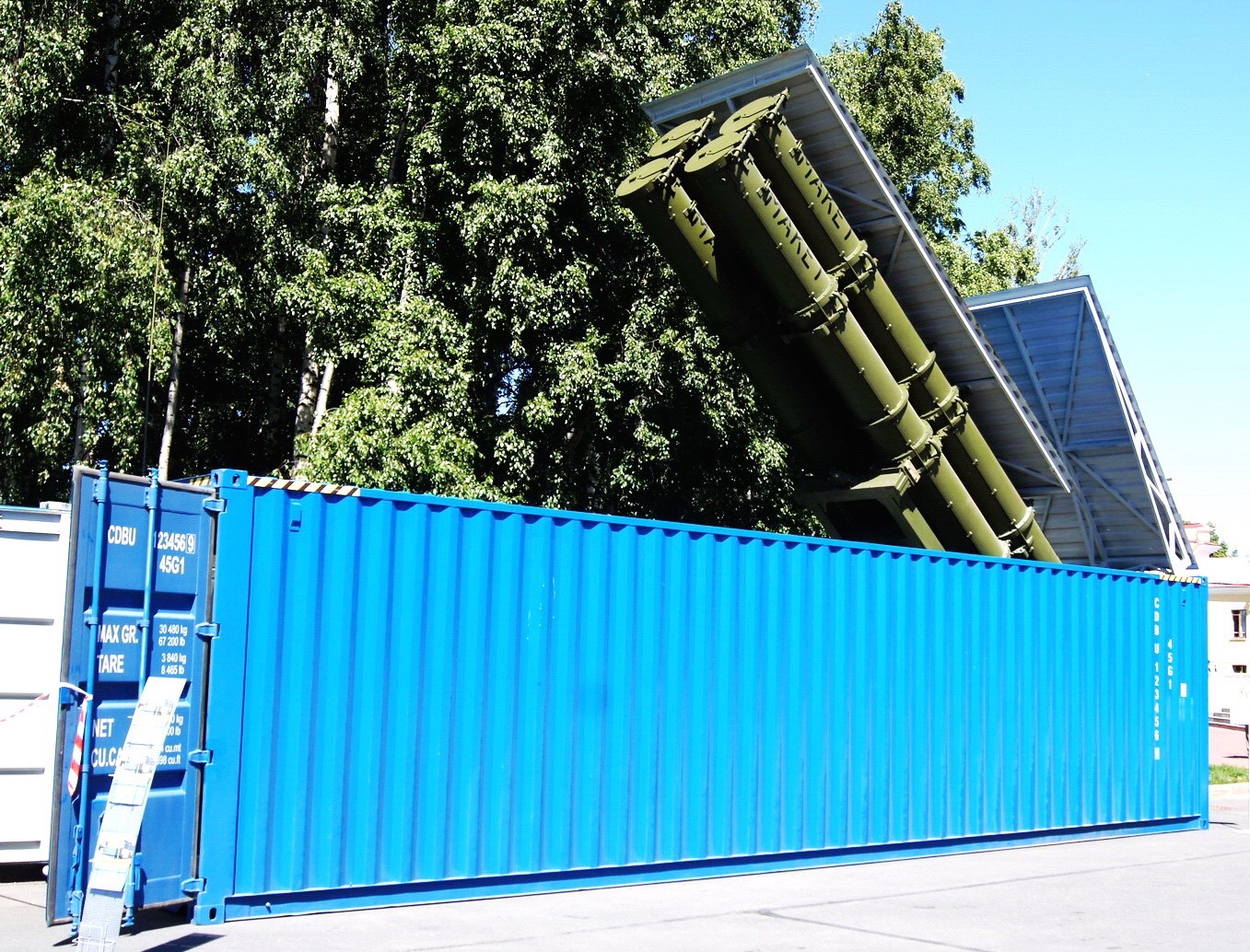
Therefore quite logical to assume that given limited capabilities of its Navy, russians will want to copy Turkish developments on modular naval air defense systems in order to have tools for protecting their shadow fleet.
Read more: Ghost Shark Gets Teeth – Australia Reveals How Its Extra-Large Autonomous Submarine Can Deploy Swarm of Drones e.g. Right Off China’s Coast